Data sources
Each affiliate kept its own inventory tools, and they could not be replaced: local engineers use them every day and they are wired into other IT systems. CELINE had to work with all of them.
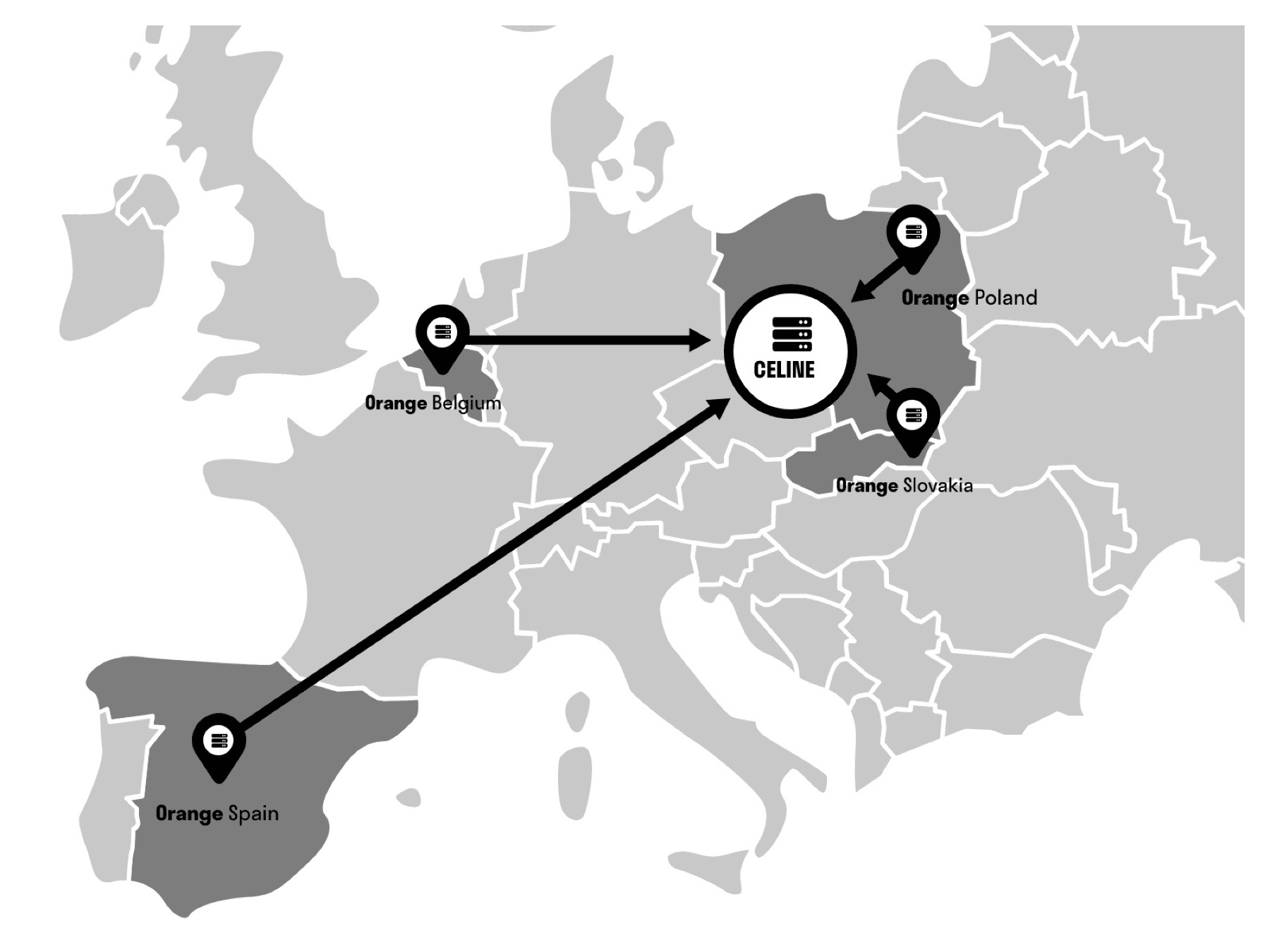
Four Orange affiliates kept their inventory data in different tools, from NetCracker to Excel spreadsheets. CELINE brings every source into one common data model for GNOC, the Global Network Operation Center.
The same approach fits: Network and telecom projects Critical infrastructure Photovoltaics and energy Automated convenience retail Logistics and distributed operations
1Different tools, different formats
2Data pumps
3One common data model
| Country | Site | Element | Type | Status |
|---|---|---|---|---|
| PL | GDN-05 | OLT-002 | OLT | Maintenance |
| SK | KE-031 | RTR-003 | Router | Maintenance |
| ES | BCN-01 | RTR-021 | Router | Active |
| PL | KRK-02 | SW-011 | Switch | Active |
| BE | BRU-07 | FW-002 | Firewall | Active |
| ES | MAD-04 | OLT-003 | OLT | Active |
| PL | WAW-12 | SW-007 | Switch | Active |
| SK | BA-142 | RTR-014 | Router | Active |
Koderia (formerly Objectify) has been part of CELINE from the very beginning. Our first contribution was to define the problem GNOC was facing.
CELINE was designed for GNOC, which maintains the network infrastructure of Orange affiliates. To do that, access to information about the network infrastructure is paramount.
Originally, GNOC worked with whatever tools each country had in place. It was clear early on that this was not efficient and that GNOC needed a single inventory solution integrating all available data sources.
Challenge · Information scattered across many different data sources
Sources ranged from huge inventory solutions like NetCracker to Excel spreadsheets.
Data from each source had to be collected and transformed into one common model.
Users must always see correct data, and get the information they need, not just raw data.
Koderia had worked on telecom inventory management long before CELINE and brought that know-how into the design from day one.
Each affiliate kept its own inventory tools, and they could not be replaced: local engineers use them every day and they are wired into other IT systems. CELINE had to work with all of them.
Specialised data pumps collect data, transform it into the Common data model and, after each synchronisation, send the aggregated view to a centralised inventory in Poland.
Each source gets its own connection and transformation. All downstream calculations and algorithms stay generic and independent of the source.
The model starts with very general terms and moves to more specific types. That is why it can describe any inventory situation, including sources added later.
Illustrative hierarchy
Mechanisms identify data inconsistencies such as broken reference integrity or violated data invariants.
Users can override data coming from a source system, and those corrections stay consistently visible across the whole application.
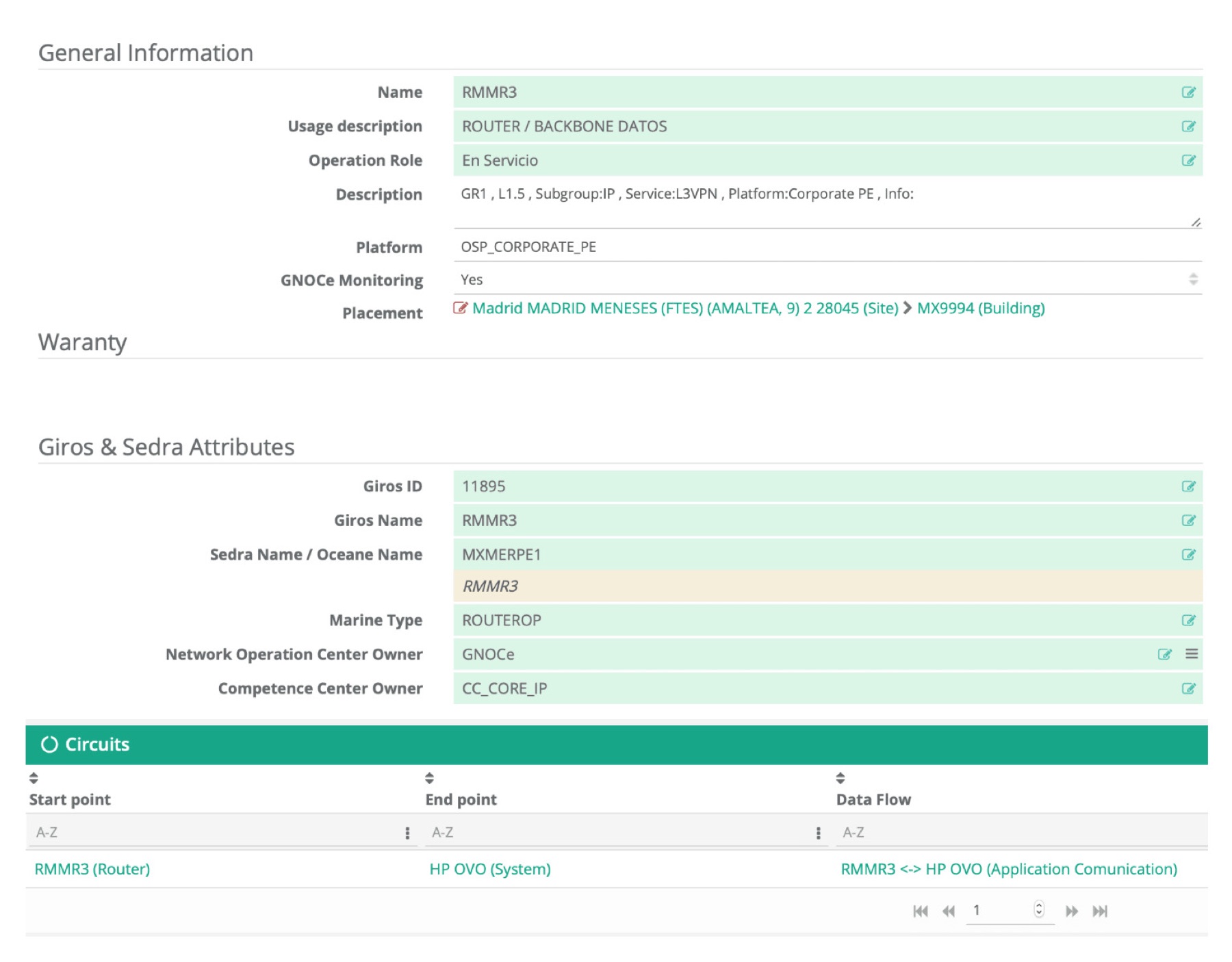
Search across all inventory objects and attributes, plus integration with our DMS for work instructions, manuals, common problems and solutions.
Custom reports tailor-made for the daily needs of GNOC engineers aggregate data from various sources.
Want one view of your own assets?Network data scattered by country?
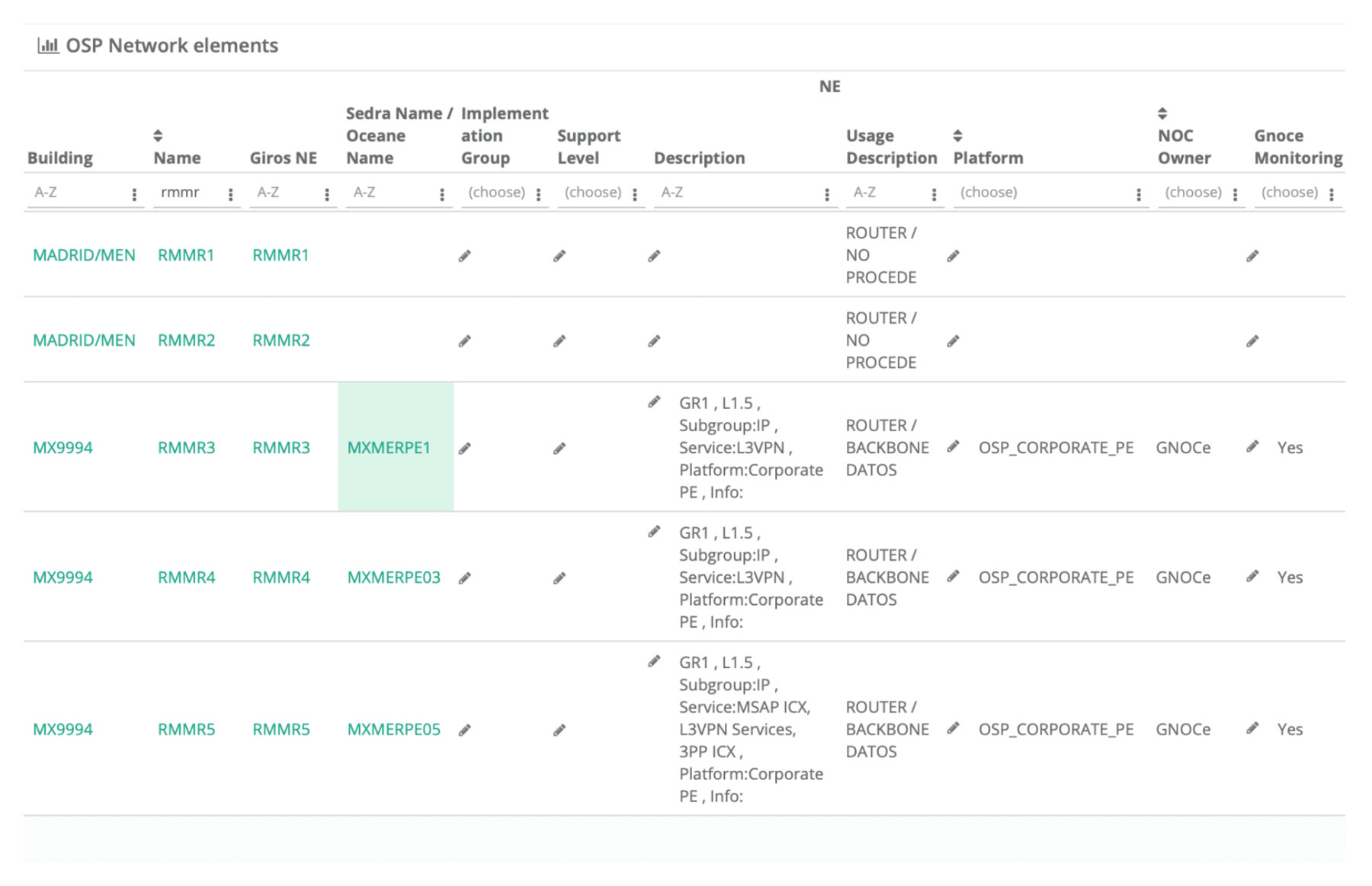
What changed for GNOC, and where it led.
CELINE integrates the available data sources into a single inventory solution for GNOC.
The Common data model can document inventory situations from sources not yet identified when it was designed.
CELINE caught the attention of the whole Orange group and became the foundation for SIA (Service Impact Analysis) at Orange Slovakia.
Where it led
CELINE was built for Orange networks, but the same problem appears wherever assets are spread across many locations, owners and tools.
We’ll add these to your message.

An evolution of CELINE: SIA assesses how network elements affect services and customers at Orange Slovakia.
An extension of SIA focused on finding the root cause of network incidents.

Centralised web storage for documents, photos, wiki pages and decision trees, integrated with CELINE.
A data synchronisation and warehousing platform for a fast-growing e-commerce brand.